"Through the centuries, waves of revolutionary iconoclasts have tried to smash everything old; the Red Guards, in the nineteen-sixties, were following an ancient tradition. The Chinese seldom built anything for eternity, anyway, nothing like the cathedrals of Europe. And what survived from the past was often treated with neglect.... As Jing Tsu, a scholar of Chinese at Yale, observes... China had long equated writing 'with authority, a symbol of reverence for the past and a talisman of legitimacy.' This is why mastery of classical Chinese used to be so important. To become an official in imperial China, one had to compose precise scholarly essays on Confucian philosophy, an arduous task that very few could complete. Even Chairman Mao, who incited his followers to destroy every vestige of tradition, proudly displayed his prowess as a calligrapher, establishing himself as the bearer of Chinese civilization.... The classical style of the language, elliptical and complex, was practiced by only a small number of highly educated people.... A linguist, Qian Xuantong, famously argued that Confucian thought could be abolished only if Chinese characters were eradicated. 'And if we wish to get rid of the average person’s childish, naive, and barbaric ways of thinking,' he went on, 'the need to abolish characters becomes even greater.'... Dictatorships shape the way we write and talk and, in many cases, think.... I still shudder at the memory of reading, as a student in the early nineteen-seventies, Maoist publications in Chinese, with their deadwood language, heavy Soviet sarcasm, and endless sentences that sounded like literal translations from Marxist German—the exact opposite of the compressed poeticism of the classical style."
From "How the Chinese Language Got ModernizedFaced with technological and political upheaval, reformers decided that Chinese would need to change in order to survive," by Ian Buruma (The New Yorker).
Showing posts with label communism. Show all posts
Showing posts with label communism. Show all posts
Friday, January 14, 2022
Friday, January 15, 2021
"In his illuminating book 'The Ministry of Truth' a biography of '1984' and its influence, Dorian Lynskey makes a persuasive case that..."
"... the novel is structured in a way that heightens its ambiguity. Yes, the brute force of totalitarianism is an inextricable theme, but the novel’s narration — with its texts within texts — also enacts its own phantasmagoria, a world where both everything is true and nothing is true. Lynskey credits Orwell with anticipating what Hannah Arendt would describe in 'The Origins of Totalitarianism,' published a year after Orwell died: 'The ideal subject of totalitarian rule is not the convinced Nazi or the convinced Communist, but people for whom the distinction between fact and fiction (i.e., the reality of experience) and the distinction between true and false (i.e., the standards of thought) no longer exist.'"
From "How ‘Orwellian’ Became an All-Purpose Insult" by Jennifer Szalai (NYT).
The top-rated comment over there is: "To accuse the opposition of being Orwellian while actually being Orwellian has become the stock and trade of the right. How Orwellian."
Does it make sense to refer to a "biography" of a book? Well, first, it's in the book's subtitle, "The Ministry of Truth: The Biography of George Orwell's 1984." Second, "bio" means life, so we can understand the extended use of the term: It means that the book has a life. Third, I suspect the usage is explained in the book, and it's my blogging practice to buy the book in Kindle form so I can do a search when I have a question of this magnitude.
But, wait. I'm reading the OED definition of "biography": "A written account of the life of an individual, esp. a historical or public figure; (also) a brief profile of a person's life or work. Later more generally: a themed narrative history of a specific subject in any of various written, recorded, or visual media." An example of that more general use is the 1999 book title: " H2O: a biography of water." And there's an 1848 book title: "The plant; a biography."
So I don't have to buy the book, but I will. Such is my dedication to this blog. Here's the closest thing to an explanation for the use of the concept "biography" to refer to a book about a book:
There have been several biographies of George Orwell and some academic studies of his book’s intellectual context but never an attempt to merge the two streams into one narrative, while also exploring the book’s afterlife. I am interested in Orwell’s life primarily as a means to illuminate the experiences and ideas that nourished this very personal nightmare in which everything he prized was systematically destroyed: honesty, decency, fairness, memory, history, clarity, privacy, common sense, sanity, England, and love....

Subscribe to:
Posts (Atom)
-
Said the Supreme Court, disposing of Trump v. Thompson with sublime efficiency. Justice Thomas would have granted what was an application ...
-
Cat Moonlight Pink PU Custom adalah salah satu series yang mengandung partikel kecil seperti crystal yang dan memiliki effect lebih gela...
-
It's mind-boggling . I'm reading "Dodd's Alleged Past Misconduct Shadows Biden's VP Panel" (Real Clear Politics)....

Cat Moonblack gold PU
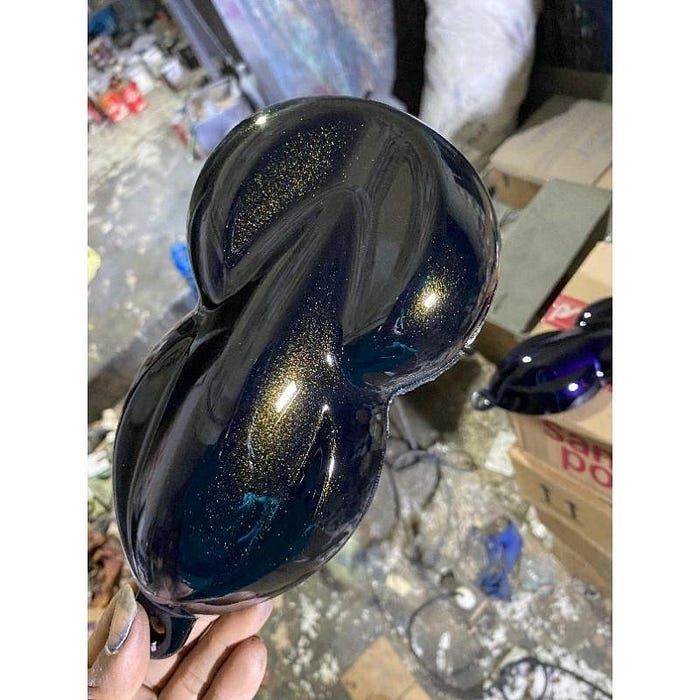
Cat Moonblack gold PU adalah salah satu series yang mengandung partikel kecil seperti crystal yang dan memiliki effect lebih gelap sehing...